
High Voltage Cable Systems

“To allow the wide-scale integration of renewable energies, networks must be able to transmit electricity over long distances and for this, HVDC cable systems are essential. We support the development of innovative solutions to ensure the reliability of underground and subsea HVDC cable systems.”
Marie-Hélène Luton, Department Director – High Voltage Cable Systems
We provide a wide range of services and solutions for HVDC grids, MVDC grids and offshore wind farm grid connections.
Thanks to our understanding of the behaviour of insulating materials under high dielectric and thermal stress, we drive the development of high-performance materials for HVDC cables and accessories.
Because reliability is a key concern for transmission systems, we develop innovative methods and devices for HV cable monitoring based on analyses of the physical phenomena that cause ageing in insulation materials.
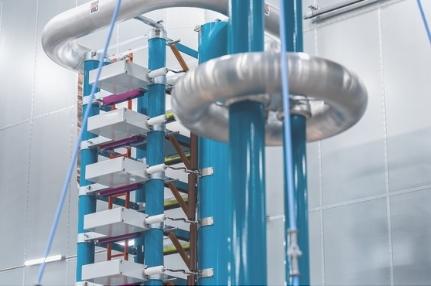
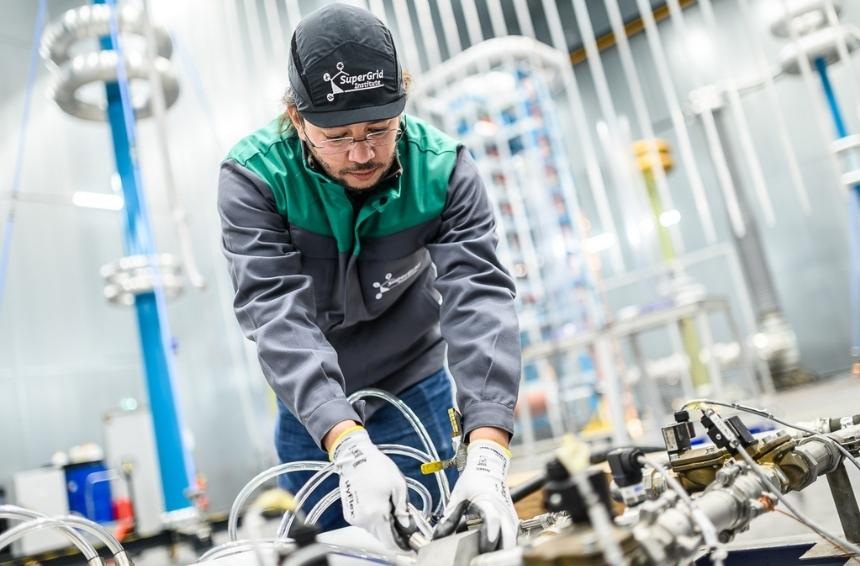
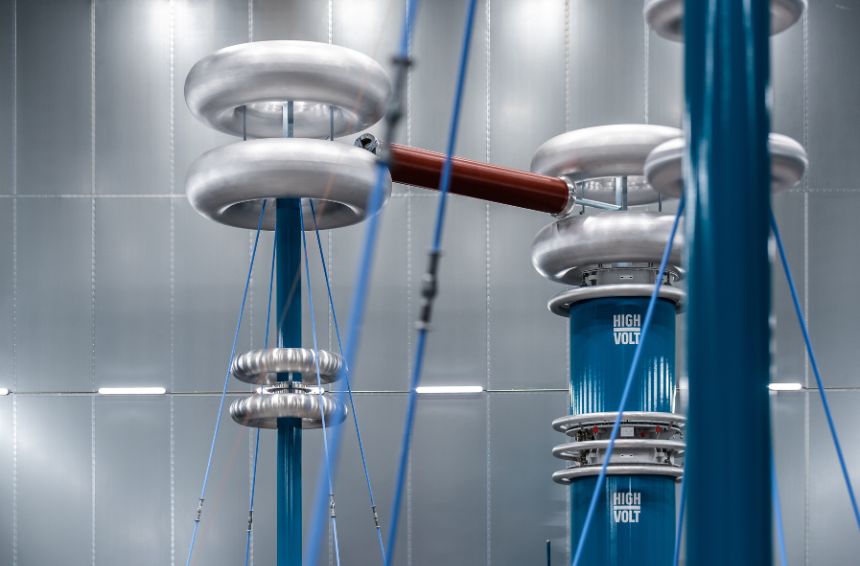
We design and operate various test platforms to reproduce the real-life conditions of high voltage cable systems and subsea equipment, including standard testing conditions, new types HVDC system transients, and combined high voltage and hyperbaric conditions.
Our projects cover:

Recent publications
Characterization and tests of the HTS tape and the preliminary pancake for the RSFCL of the SCARLET project
Characterisation of HTS tapes and a first superconducting pancake coil for an RSFCL developed within the SCARLET project.
An optical magnetometer toward measurements of low current magnitudes for high voltage power transmission applications
A Zeeman-effect magnetometer measures magnetic fields from leakage currents in HVDC cable insulation, supporting insulation condition assessment.
Surface Charge Measurements in Non-Uniform Pressurized Air Gaps with a Dielectric Barrier
Surface charge measurements investigate dielectric barrier behaviour in pressurized air gaps, supporting compact SF₆-free GIS design.