
Power Electronics & Converters

The Power Electronics and Converters department develops innovative power conversion solutions for HVDC and MVDC applications. In HVDC we focus on solutions for electricity transmission networks covering AC/DC and DC/DC converters, large buffer storage systems, and power flow controllers. In MVDC we study and develop technologies for distribution networks, with a focus on protection, DC/DC converters, and energy storage systems.
The department conducts research on topologies and controls for power converters and their associated technologies, such as medium frequency transformers, silicon carbide (SiC) components and switching cells. Other research topics include condition and health monitoring, as well as digital twin modelling applied to power converters.
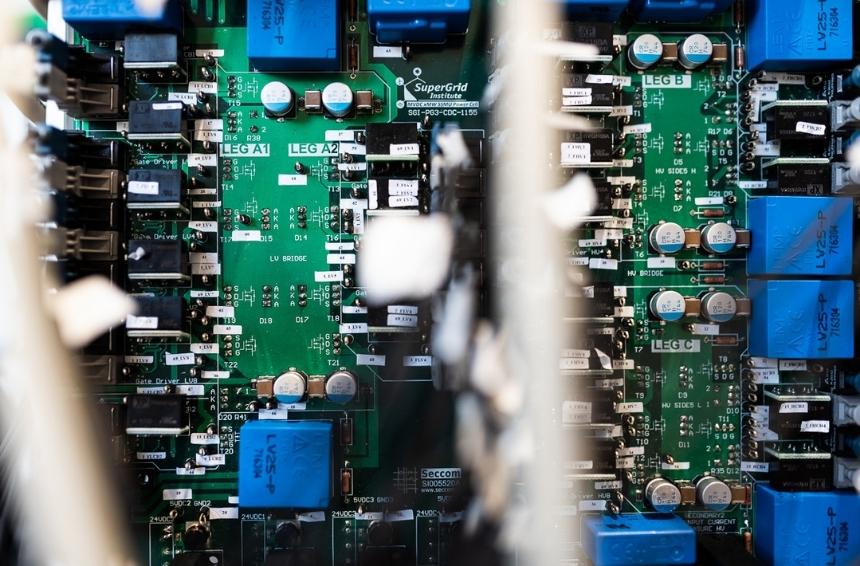
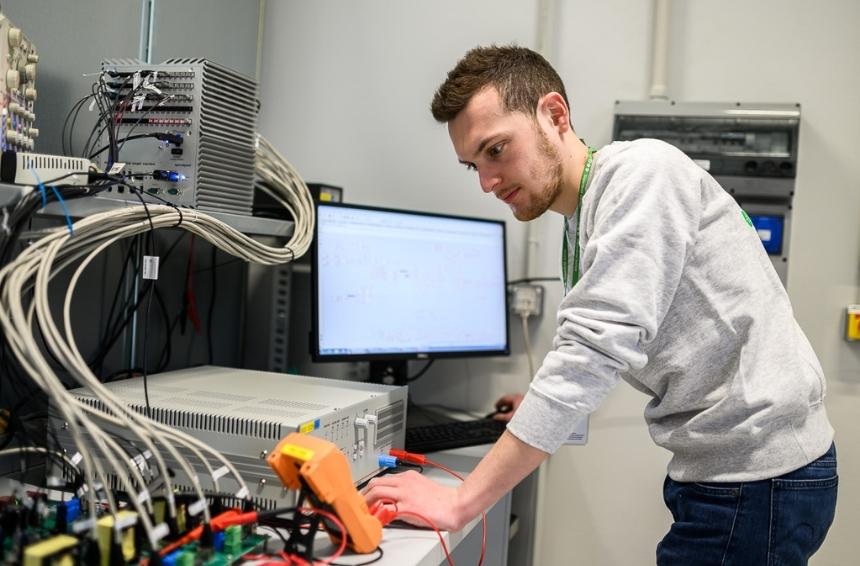
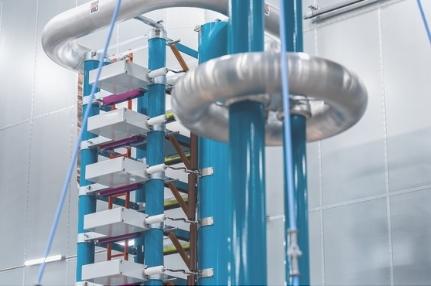
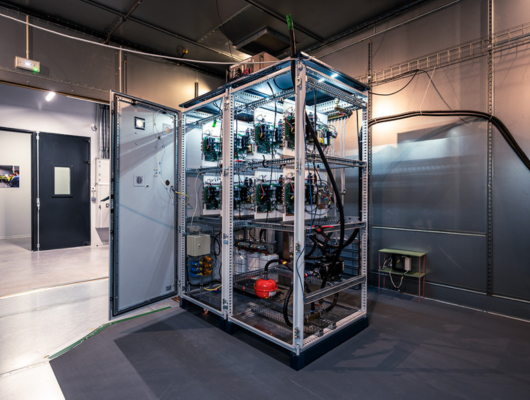
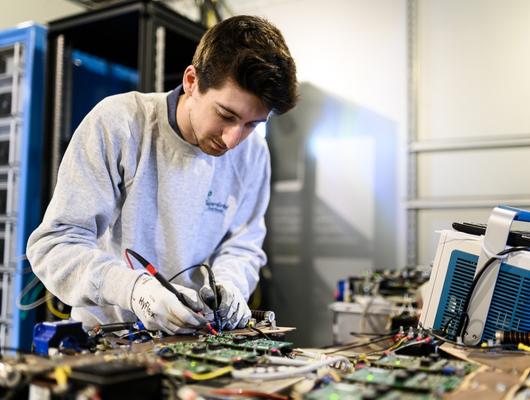
Advanced testing facilities enable us to perform full characterisation tests on power components up to many kVolts and kAmps, as well as back-to-back converter testing combined with a 100 kW deionised water cooling heat exchanger.
Our research includes:
Recent publications
Characterization and tests of the HTS tape and the preliminary pancake for the RSFCL of the SCARLET project
Characterisation of HTS tapes and a first superconducting pancake coil for an RSFCL developed within the SCARLET project.
An optical magnetometer toward measurements of low current magnitudes for high voltage power transmission applications
A Zeeman-effect magnetometer measures magnetic fields from leakage currents in HVDC cable insulation, supporting insulation condition assessment.
Surface Charge Measurements in Non-Uniform Pressurized Air Gaps with a Dielectric Barrier
Surface charge measurements investigate dielectric barrier behaviour in pressurized air gaps, supporting compact SF₆-free GIS design.